Managed Business Services: 10 Things You Should Know Before You Hire Your Next VA
You’re tired.
Not because the work is hard. You’ve done hard work before. You’re tired because your brain feels like a browser with fifty tabs open, and forty of them are frozen.
You thought hiring a Virtual Assistant (VA) would fix this. You thought that by "handing things off," you’d finally find that elusive space to breathe. To think. To build.
Instead, you found a new job: Managing a VA.
You’re still answering the same questions. You’re still checking the work. You’re still the bottleneck. This is the VA trap. It’s a situation that seems harmless because the individual tasks are easy, but it becomes destructive in aggregate.
Before you post that next job listing or browse a freelance marketplace, you need to understand why the traditional VA model often fails fast-growing teams: and why managed business services are the infrastructure you actually need.
1. Delegation is not Removal
Most founders confuse delegation with removal.
When you delegate a task to a traditional VA, the task is off your plate, but the responsibility stays in your head. You still have to remember that it exists. You still have to track its progress. You still have to verify it was done correctly.
This is "mental residue." It’s the background processing power your brain consumes just to keep the VA moving.
Managed business services don’t just take the task; they take the responsibility. You aren’t managing a person; you are subscribing to a result. It’s not about moving a box from your desk to theirs; it's about removing the desk entirely.
2. The Management Tax
Every person you add to your team comes with a "Management Tax."
With a solo VA, you pay this tax in time. You spend your Monday mornings explaining the week’s priorities. You spend your Friday afternoons chasing down status updates.

If you are a solo founder or a lean team, you cannot afford this tax. Your time is your most expensive asset. A virtual operations assistant within a managed framework includes a built-in manager.
At Dayaly Ops, our pods come with internal oversight. We do the checking, the chasing, and the quality control. You get the output. We pay the tax.
3. Systems Over Superstars
We’ve all been there. You find a "Rockstar VA." They are perfect. They anticipate your needs. They are the glue holding your operations together.
Then, they get sick. Or they take a better offer. Or their internet goes out for a week.
Suddenly, your business stops. This is "Ops Debt." You’ve built your business on a person rather than a process.
Managed services focus on standardized playbooks. We don’t rely on individual heroics; we rely on systems that work regardless of who is sitting in the chair. It’s not about finding a superstar; it’s about building a super-system.
4. The Power of the Pod
A solo VA is a single point of failure. A managed business service uses a pod structure.

A pod is a dedicated unit designed for redundancy. If one person is away, the others step in. The knowledge isn't trapped in one person's head; it’s documented in the pod’s shared brain.
You don’t have to worry about coverage or "onboarding" a replacement. The pod is an evergreen resource that stays consistent even as individuals change.
5. Plug-and-Play Integration
Hiring a VA usually means spending weeks: if not months: teaching them your "way of doing things."
Managed services are designed to be "plug-and-play." At Dayaly Ops, we don't ask you to change your workflow. We integrate into your existing tools like Notion, Slack, and email.
We bring the playbooks to you. We aren't a new tool you have to learn; we are the engine that runs the tools you already have. You shouldn't have to build the road just to drive the car.
6. Fixed Pricing vs. Variable Anxiety
The freelance model is built on hours. But hours are a poor metric for value.
When you pay a VA by the hour, you are subconsciously incentivized to worry. Why did that take three hours? Is this invoice accurate?
Managed services use fixed monthly pricing.
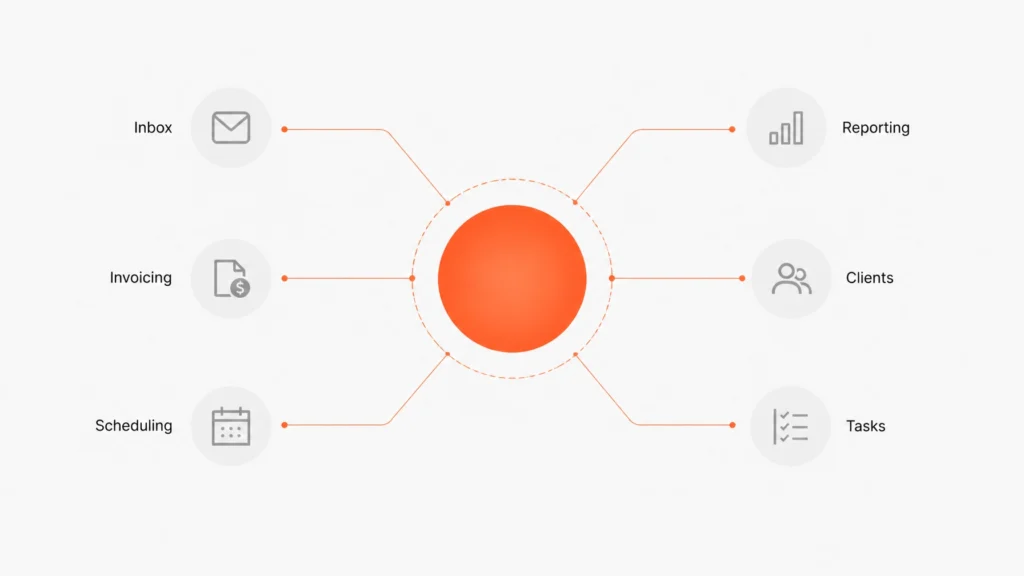
Whether it’s admin support, inbox management, or invoicing, you know exactly what your "Ops spend" is every single month. No surprises. No "billable hour" friction. Just a flat fee for a fully managed operations team.
7. Professionalism vs. Freelance Friction
Freelance VAs are often juggling five other clients. You are just another task in their queue.
When you use a managed service, you are partnering with a company, not a gig worker. There is a higher level of accountability. There are security protocols. There is professional-grade reporting.
You aren't just getting a "helper." You are getting a remote operations department. If you want to see how your current operations stack up, you can even take a free Ops Audit to see where the friction is hiding.
8. Playbooks are the Product
The secret to scaling is not hiring more people; it’s creating more playbooks.

A traditional VA does what they are told. A virtual operations assistant in a managed pod documents what they do.
They create the instructions for the next person. They turn your messy, "in-your-head" processes into repeatable, scalable assets. These playbooks are the real product. They are the equity of your operations.
9. Cognitive Load and Scalability
Scaling a business with solo VAs is a linear struggle. More business = more VAs = more people for you to manage. Eventually, you hit a ceiling where you spend 100% of your time managing people and 0% of your time growing the company.
Managed services offer non-linear scaling. You add a pod, and your capacity doubles, but your management overhead stays at zero.
This is the shift from being a "manager" to being a "leader." Leaders don't watch the clock; they watch the horizon.
10. The Mental Shift: Building vs. Doing
The ultimate goal of managed operations is to change your relationship with your business.
It’s not about doing more. It’s about being more.
When the "Ops Grind": the invoicing, the vendor coordination, the inbox clearing: is handled by a managed team, you stop being a technician in your own business. You become the architect.
You transition from a state of "reaction" to a state of "creation."
The Cost of Doing Nothing
Every day you spend micromanaging a VA is a day you aren't spending on your core business priorities.
Think about the project you’ve been putting off for six months. The one that would actually move the needle. The one that would change everything.
Why haven't you started it?
It’s not because you don't have the time. It’s because you don’t have the "mental bandwidth." You are suffering from the Ops Tax.
Managed business services aren't just an expense. They are a reclamation of your focus.
The question is no longer "Can I afford to hire help?"
The question is: "What is it costing me to keep doing this myself?"
{“@type”:”BlogPosting”,”image”:”https://cdn.marblism.com/JOQtgcKs3kA.webp”,”author”:{“url”:”https://dayalyops.com”,”name”:”Dayaly Ops”,”@type”:”Organization”},”@context”:”https://schema.org”,”headline”:”Managed Business Services: 10 Things You Should Know Before You Hire Your Next VA”,”publisher”:{“logo”:{“url”:”https://cdn.marblism.com/oHcyirW0P-q.webp”,”@type”:”ImageObject”},”name”:”Dayaly Ops”,”@type”:”Organization”},”articleBody”:”You’re tired. Not because the work is hard. You’ve done hard work before. You’re tired because your brain feels like a browser with fifty tabs open, and forty of them are frozen. You thought hiring a Virtual Assistant (VA) would fix this. You thought that by ‘handing things off,’ you’d finally find that elusive space to breathe. Instead, you found a new job: Managing a VA… [full article content summary] …”,”description”:”Learn the 10 critical differences between hiring a solo virtual assistant and using a managed business operations service. Avoid the ‘VA trap’ and scale your team with managed pods.”,”datePublished”:”2026-05-20″}